Does PPC Advertising Spell Pay Per Crook for Your Business?

By Carl Weiss


When you think about it, it’s amazing that the bulk of Google’s revenue is derived from Pay-Per-Click (PPC) advertising.I say that because many small business owners whom I speak to, who have used PPC ads, are dissatisfied with their results.  It’s not that they aren’t appreciative of the fact that PPC can generate a Page One position for their business.  It’s more that using PPC does just that and little else.  Generating a click doesn’t mean generating a lead or a sale.  It simply means generating a click, every one of which erodes your ad budget.  While some clicks are spurious at best, before you decide to declare your PPC ads DOA, there are a few things you should consider.


#1: Have You Fine Tuned Your Ad?


One of the things that many neophyte PPC advertisers don’t realize is there are a number of ways to fine tune their campaign.  Adwords, along with most every other PPC engine will leave the pipe wide open unless you specify otherwise.  This means is that you need to determine when, where, and how often your ads are displayed.  If you aren’t the kind of business that offers 24-hour service, why run your ads all night along?  Simply by specifying you only want your ads to be displayed form 9 a.m.to 5 p.m. will literally cut the burn in half.  If you don’t sell your products or services worldwide (or in every state in the Union for that matter), you need to tune your campaign to specify its geographic scope.  Keyword selection is also key.  Not only is it important to choose the keywords and phrases that best describes your business’ products and services, you also need to add negative keywords to exclude your ad being displayed for similar keywords that will generate browsers as opposed to buyers.


#2: Why Being Number One Isn’t the Best Bet


Other than failing to test and measure your keywords effectiveness, the second biggest blunder that any PPC advertiser can make is to insist on being the number one result.  In the first place, since all PPC advertising is based on an auction, jumping right to the head of the line only assures you that you are going to pay top dollar for every click you receive.  It doesn’t necessarily mean you are going to generate the most results.  Far from it, since you will burn up your ad budget the fastest this way.  All that shooting for the top slot means is that you run the risk of creating a bidding war that you can’t win.  


What we aim for is position number three for our clients that use PPC.  The third from the top means that your ad will display at the top of Google.  It also means that your limited advertising budget will go further before your ad reaches your daily limit and goes dark.  


#3: How Strong is Your Offer?


If you really want to get the biggest bang for the buck, you need to spend more time working on your message and offer, and less time worrying about being atop the pile.  In fact, a world-class, text-based ad can help you generate more clicks in the number three spot than a weaker ad can at the top of the page.  Since PPC ads are the only thing online that requires you to be more succinct that when you use Twitter, less is definitely more.


The key to maximizing results is to thoroughly understand the demographic and psychographic profile of your ideal customer.  What age brackets do you wish to target?  Which income brackets are representative of your ideal prospects?  Where do your ideal prospects shop?  Knowing these factors will not only help you hone your ad to a fine edge, but it will also aid you in selecting the best keywords and phrases from which to campaign. 


Once you have a complete profile of your ideal prospects then it’s time to create the ads that are designed to appeal to this group.  That’s right, I said ads.  The beauty of working online is that every click can be tracked.  In order to maximize your results in any PPC environment you want to design and test a number of different ads.  What sounds good on paper may quickly prove to be next to useless in the fast-paced world of the Internet.  Unlike print ads that are fixed in stone for a set amount of time, online ads are imminently adjustable.  Within a few days of launching any PPC campaign, you should be able to determine which ads are pulling their weight and what ads need to be either tweaked or pulled out of rotation altogether.  You should also do the same for your keywords, as well as the networks upon which your ads are displayed.


Unless you intend to shred a mountain of money in your initial attempts to locate and appeal to your ideal prospects, all of the steps above must be accomplished before your campaign is activated and the first click is produced.


#4: Looking for a Happy Landing?


Unlike in aviation, where it is said that any landing you can walk away from is a good one, if you want to have a high probability of converting clicks into cash you need to look at the place you intend prospects to land.  The single biggest mistake advertisers make is to send the prospect to their homepage.  Your homepage is designed to showcase your business, not to create new customers.  As a general rule, it’s too busy.  It offers too many choices to prospects. It wasn’t designed with the express purpose of dangling the bait and reeling in the fish.  In short, if you send a prospect to your homepage you have just reduced your ROI by as much as 90%.


Just like your ad, your landing page needs to be customized to funnel the prospect through the buying process with the least amount of speed bumps to accepting your offer.  It needs to contain a short series of selling lures that will make your landing page stickier.  In short order, you need to answer the following questions:


    1.      What need or desire are you trying to fulfill?
    2.      How does your offer remedy a problem or ease a pain?
    3.      How does your offer stack up to the competition’s offer?
    4.      What counteroffer are you promoting in case the fish doesn’t take the bait?


The best way to crystalize the process is to take a look at your existing landing page.  From a visual standpoint, what catches the eye?  Are you wasting valuable real estate above the fold with nebulous graphics or fancy Flash cells that do little to entice the prospect into taking action?  What type of funnel have you created to limit the prospects’ choices and lead him or her inexorably to agreeing with your marketing message and taking the bait?  How much sales resistance is your offer likely to cause and how does your copy address it? 


#5: Don’t Drop the Ball at the One-Yard Line


U.S. Air Force Academy senior linebacker Aaron...
U.S. Air Force Academy senior linebacker Aaron Shanor recovers a fumble by California Golden Bears tailback Justin Forsett during the Bell Helicopter Armed Forces Bowl at Amon G. Carter Stadium in Fort Worth, Texas. ID: 071231-F-0558K-010 (Photo credit: Wikipedia)
So you have made a successful pitch and have generated a lead.  Bravo! Don’t pat yourself on the back just yet.  The secret to turning leads into sales without running yourself to ground is via a drip marketing program.  While most business owners feel that they can kick up their feet and relax once the lead or initial sale is in the bag, I disagree.  All you have done is taken back a tiny amount of ground for a battle that was hard-fought.  If you really want to maximize the ROI of any online marketing campaign, what you need to do next is craft a multi-touch drip marketing plan that reaches out and touches a prospect no fewer than ten times.


If you want to enhance your return, I suggest sending buyers a monthly online newsletter that keeps them appraised of your growing business.  Feel free to include an offer at the bottom of each newsletter.  This tactic not only is a cagey way to dangle an offer in front of a prospect, it is also a way to keep your business top of mind.  If you really want to generate maximum return on every dollar invested, this technique is truly gold-plated.


While many business people lament the sometimes uneven results that they achieve when they employ PPC ads, the best way to turn clicks into cash is to up the ante and make sure that you aren’t robbing yourself blind by failing to fine tune your campaigns.


Since 1995, Carl Weiss has been helping clients succeed online.  He owns and operates several online marketing businesses, including Working the Web to Win and Jacksonville Video Production. He also co-hosts the weekly radio show, "Working the Web to Win," every Tuesday at 4 p.m. Eastern on BlogTalkRadio.com.

In Search of Sir Spamalot

By Carl Weiss

The Holy Hand Grenade of Antioch, originated f...
The Holy Hand Grenade of Antioch, originated from Monty Python and the Holy Grail. (Photo credit: Wikipedia)
Everyone remembers the 2005 musical comedy Spamalot along with its irreverent send up of the Arthurian legend.  Directed by Mike Nichols, the Broadway production garnered three Tony awards and grossed more than 175 million dollars.  Flash forward nearly ten years and the term can be applied anew, only this time without coconut shells substituting for horses or the Holy Hand Grenade of Antioch.  What I am referring to is online spam.

What Constitutes Spam?  (And I’m not talking about the kind that comes in a can.)


Ever since the Internet was begun there have been a number of individuals who weren’t willing to play nice with all the other children.  Spammers have been the bane of many people’s existence online, especially in terms of using the worldwide web as a kind of email assault weapon,.  How big of a problem is spam mail? 

According to securelist.com as of August 2013:
·  The percentage of spam in email traffic in August was down 3.6 percentage points and averaged 67.6%.
·  The level of phishing increased tenfold compared with July, and averaged 0.013%.
·  Malicious attachments were found in 5.6% of all emails, an increase of 3.4 percentage points compared to the previous month.

Add to this the fact that not only have malicious emails increased during the past year, but spammers have become much craftier, using everything from “Back to School” themes during August and September, to other lures relating to everything from popular holidays, sports, lifestyle, age and gender slants. 

Recent spam trends have included fake airline ticket offers, cruise ship deals and other inducements targeted toward people looking to take a vacation.  A number of these emails were even made to look as though they had been sent by legitimate companies such as Delta Airlines, Royal Caribbean Cruise Line or shipping companies such as FedEx, UPS and DHL.

“Fake notifications often utilize the names of popular international delivery services such as FedEx, UPS and DHL. They tell recipients that a courier failed to deliver their parcel due to an incorrect delivery address. To get the parcel, the recipient should print out the attached document and call the company's office or confirm specified data, including the delivery address. Malicious files can also hide in fake documents supposedly containing detailed information about the parcel, which does not in fact exist. Spammers try to make their fake notifications look legitimate and typically use not only an apparently real sender's address but provide non-existent order information, genuine contact details from official websites and a copy of a privacy notification letter.”

There Ought to Be a Law

While there are indeed a number of laws on the books in the US, the problem begins with trying to determine where the spam originated.  In fact the preponderance of spam originates from foreign shores.  A number of spammers also use proxy servers, slave drives and other forms of subterfuge to cover their trail.  There are a number of state, national and international laws in effect to prosecute these crimes. However, this type of subterfuge not only makes it difficult to prosecute the offenders, it makes it nearly impossible for the average citizen to seek any sort of redress should their system be compromised by malware.


An Ounce of Prevention is Worth a Pound of Cure

The first line of defense in the fight against spam is to never open an email from an email address with which you are unfamiliar.  This doesn’t guarantee success either, since email addresses can be pilfered and/or spoofed.  So if your best friend sends you an email that goes something like, “Check out this blog/offer/link,” don’t go there since your friend’s address has in all likelihood been compromised.  The quickest way to infect your system with malware is to get you to accept a link.

Also look for odd word choices or misspelling since people to whom English is a second language frequently have a hard time getting a fluent grasp on our native tongue.  If the message tells you that you have either won some contest that you never entered, or are about to be penalized due to an implied negligence, don’t fall for this trick. (Note: The IRS does not notify you by email.)  When in doubt, call the company from which the notice was purportedly sent or talk to an expert such as your business partner, accountant, or attorney if you need to check out any offer’s validity.  Never click on a link due to any emotional response.

Do not fall for an unsubscribe that requires you to enter your email address.  This is just a ruse designed for you to verify that your address is active.  There are dozens of ways for a spammer to get your email.  They can purchase a list or they can use a bot to trawl your site looking for contact information.  Don’t make spammers lives easier by signing up to win a free iPad.  Guess what, the only winner is going to be the spammer.

Need to leave your contact info on your website?  No problem.  If you use Gmail, you can create a number of subsidiary email addresses that you can use and eventually change once the spammers get hold of them.  Here’s a tip from WikiHow:

Have one main account, and then make a separate account for different purposes (one for friends, one for entertainment sites, one for your financial websites, etc.).
·         In gmail, you can add a "+" button to your email address. For example, you can signup for newsletters like JohnDoe+Newsletters@gmail.com if your email address is JohnDoe@gmail.com
·         Set all those addresses to forward the mail to your main account so that you do not have to check multiple accounts.
·         If you start receiving spam through one of your alternates, you can trace it to one of your disposable addresses and simply delete that account.

You Need More than One Line of Defense

While most email systems come with a spam filter, this is not nearly enough to protect your system from malware.  I recommend you not only invest in a first rate virus and malware protection system, but you should also invest in a secondary adware/malware system such as Malwarebytes or Advanced System Care.  Today one level of defense is insufficient to protect your system and your data.  Better to pay a few dollars now than many thousands of dollars should your security be compromised.

If you haven’t realized it already, spam is not going to go away.  If anything, it is becoming ever more prominent, effective and insidious.  While laws will continue to be created, these will have little or no effect slowing much less stopping those who wish to spam a lot.  Unlike the Knights of the Round Table, the call to arms when it comes to spam is not ‘One for all and all for one.”  It’s more like, “Every man for himself.”  That being said, it is up to every individual to defend themselves against this ilk since the courts are for the most part stymied by the international nature of this techno crime.  Where’s the Holy Hand Grenade when you really need it?


When Carl Weiss isn’t tilting against technological windmills, he helps clients learn how to start working the web to win.  He is also co-host of the weekly online radio show of the same name that airs live every Tuesday at 4 pm Eastern.

Are You Ready to The Win BIG Game Online?

By Carl Weiss

When Fall is just around the corner and anyone mentions the big game, most people immediately think of the Super Bowl.  And why not?  With a viewing audience of a hundred ten million for a game that commands nearly four million dollars for a 30-second TV ad, this is one game that’s hard to beat.  Well, at least it is on TV.  When it comes to that other big game, the online marketing game, we’re talking about a whole other arena.

With a worldwide audience of nearly three billion, Internet marketing is in a league of its own.  Unlike pro football, this is one game where literally every business owner on the planet is forced to play.  The problem is that most businesses are still sitting on the bench when it comes to online visibility.  Statistics show that 95% of businesses in the US have little or no presence on page one of the major search engines.  This is primarily due to the fact that this is one game where the rules constantly change.

Time to Get Off the Bench and Into the Game

Most businesses have a website.  In the past this was all you needed to get off the bench and into the 
Quarterback Shaun Carney rushing Français : Le...
game. That’s because before 2005, the Internet used a website-centric architecture.  What this means in plain English was that back then all you needed was a properly optimized website to get into the game.  This was in the time before such things as blogs, social networks and online video.  Once these online elements became commonplace on the Internet, the rules of the game were changed forever.  So much so, that by 2014, your website only contributes 25% to your overall ranking.  The other 75% consists of activity related to your blogs, social nets, podcasts and videos.

Sad to say but the days of set-it-and-forget-it online marketing are over.   If you want to succeed online, you need not only to embrace the off-site elements of your web presence.  You need to feed them.  More importantly, before you spend a lot of time and money playing the game of online marketing you need to start off by taking a look at your current strategy.  More precisely, you need to ask yourself the following questions:
    
    1.     How many page one positions does your       site currently have and under which               keywords?
   2.      How much traffic are you now generating? 
   3.      How many sales per month are a direct result of your website?

If your answer to these questions is either none or “I don’t Know,” then you need to head back to the locker room and rethink your strategy.  Because if your current game plan is not scoring, the only solution is to make some changes. 

If the name of the game is to score, then the first thing that every business owner needs to do is define what is meant by scoring.  I mean, are you trying to generate leads, sell your products and services, or simply brand your business.  If you can’t define your online goal, how are you going to be able to achieve it?

The Starting Lineup

The Patriots defense rushes the Eagles offense...
The Patriots defense rushes the Eagles offense during Super Bowl XXXIX. The Pats D had 4 sacks costing the Eagles 33 yards. (Photo credit: Wikipedia)
Once you determine what you are looking to achieve on the playing field, then you need take a look at both your offense and defense.  Where most people consider their website to be the quarterback, in today’s online arena it is really only an eligible receiver ready to move the content you create.

You really need to look at your blog as the quarterback, since it is responsible for passing on timely information regarding your business.  Face it, once you create or refresh a website how often do you change it?  Once every year or so?  I you want prospects and clients to stay current with your business weekly blogs are the best way to move the ball down the field.  Of course, there are a number of other positions that are vital to your offense. 

We regard our social networks as our offensive line.  They give us the ability to run interference so that our receivers can get in position to catch the pass before the quarterback gets sacked.  Like any good offensive line, these players need to workout daily in order to keep in shape.  They need to stay healthy throughout the long season.  And they need to get off the bench and into the game.

That brings us to special teams, which is how we regard videos and podcasts.  It used to be that the Internet was text only.  Today that isn’t the case. Back in the late nineties people who found your business online would spend quite a lot of time clicking around your site to check you out.  Today you have less than two minutes to score.  Add to this the fact that people are five times as likely to watch a video or listen to a podcast than read text and you have to ask yourself if going multimedia isn’t a winning strategy you need to adopt.

Your Offense is only as Good as Your Defense

When it comes to winning, defense is every bit as offensive, right.  Think about what would happen to t
Shea Smith, the former quarterback of the Air ...
Shea Smith, the former quarterback of the Air Force Falcons, looks to pass during the 2007 Armed Forces Bowl. Español: Shea Smith, el ex mariscal de campo de los halcones de las Fuerzas Aéreas, se pase el fútbol durante el Armed Forces Bowl de 2007. Français : Le Quarterback Shea Smith juste avant de faire une passe. Suomi: Pelinrakentaja Shea Smith valmistautuu syöttämään. (Photo credit: Wikipedia)
he quarterback if the ball was hiked to him and there weren’t any linemen to keep the other team’s defense at bay.  That would be either a very long day or a very short day for that QB.

Before a consumer or another business owner decided to do business with you, they need to check you out.  While your website, your blogs, your videos and social posts tell them a little bit about what you do, what it doesn’t tell them is what your customers think of you.

The main reason that prospects are reluctant to give you their contact information or make an initial purchase doesn’t have as much to do with price as it has to do with trust.  The Internet is known to be a den of scammers and spammers.  You read about it every day.  Today things like reputation management, online reviews and video testimonials are vital to giving a prospect the confidence to make an initial purchase or sign up for an offer.

That means they want to read reviews and they want to hear what your customers have to say before they do business with you.  I you aren’t cultivating positive reviews and posting credible video testimonials then don’t complain if they decide to do business with someone that does.

Worst of all is the fact that if you do not have a mechanism in place that fosters positive reviews then that only leaves what:  Negative Reviews.  I don’t care how conscientious you are then sooner or later you are bound to rub someone the wrong way.  When that happens don’t be surprised if the disgruntled party doesn’t post negative remarks and ratings about your company.  That’s just the way the web works today.  That’s also why you need to make the effort to cultivate positive reviews.  This way if you take a hit, you will be able to get back on the field and continue to play.

Gimme the Ball, Coach!

Last but not least the thing that separates the dynasties from the also-rans in the NFL is one thing: 
Coaching.  If you are still trying to put together a winning team without a coach, or are trying to coach your team by yourself, let me give you some food for thought.  Working the web to win is not a game
 to be taken lightly.  The success or failure of your business could well hinge on your company’s web presence.  Get it wrong and your website could languish in the backfield of this money game.    This also holds true for anyone you hire to manage your web presence. 

Unless you have the manpower and intestinal fortitude to lead your team onto the field week in and 
U.S. Army Gen. David H. Petraeus, commander, U...
U.S. Army Gen. David H. Petraeus, commander, U.S. Central Command, gets ready to toss the coin at Super Bowl XLIII, Feb 1, 2009, at Raymond James Stadium in Tampa, Fla. (Photo credit: Wikipedia)
week out you are going to have to hire a coach.  While there are many  highly reputable online marketing firms out there, there are also a number of firms that can do more harm to your business than a wily competitor.  That’s due to the fact that there are still some people who make their money by trying to cheat the search engines in order to beat the search engines.  While black hat tactics can jump you to page one in a hurry, once discovered these tactics can cause your website to be banished from the playing field altogether.


Therefore it is important that you check out the credentials of anyone who offers to help you promote your web presence online.  Among other questions, you need to ask the following:


     1.      How many years have you been promoting businesses online?
     2.      Can I speak to some of your current clients?
     3.      What are your fees and what will I receive should we choose to hire you?
     4.      How long is the contract?
     5.      Do you offer any guarantees?
     6.      What happens if you fail to deliver?
     7.      Who do I call if I have any questions or concerns?
     8.      Have any of your clients ever been de-listed by the search engines?

Last but not least you should search online to see if their firm has any positive or negative reviews.  (Having no reviews is almost as big of a red flag as having a bunch of negative reviews.)  The last thing you want to do is trust the future of your team with anyone who has not been able to deliver a winning season or who has been penalized by the league. Because when it comes to playing the game of online marketing, you’re only as good as your last season.

Carl Weiss is president of Working the Web to Win, a digital marketing agency based in Jacksonville, Florida.   You can listen to Carl live every Tuesday at 4pm Central on BlogTalkRadio


Turn Your Best Customers into Your Best Salespeople

Everyone thinks that being on page 1 of search engines like Google is the be-all, end-all of online marketing.  Far from it.  In fact, I have known a number of companies that were all over page one but were still failing to convert clicks into cash.  Like it or not, the biggest roadblock you have in finding the net profit on the Internet is not only related to generating a page 1 result.  The other and even more important factor is credibility.

 Face it, if someone clicks from a search engine to your website there is a 99% probability that they don’t know you.  Add to this the fact that there are more scammers and spammers online today than ever before and it is natural that most trust is at a premium online.  While things like Google reviews and rave reviews on sites like Angie’s list can go a long way toward building customer confidence, there is an even better way to seal the deal.  If you are looking for the ultimate Internet confidence booster, allow me to say two words: Video Testimonials.  Now I know what you're thinking, "I already have testimonials on my website.  Why do I need to create videos of them?"

If you want the short answer to the question, pick up the phone and call a friend and ask him or her when they look at a printed testimonials, who they assume wrote them.  Nine times out of ten the answer you will receive will be, "The website owner."

That's the problem with printed testimonials. They lack credibility.  Just like backlinks, it is all too easy to rig the game by planting bogus testimonials on a website. Video virtually eliminates the possibility of chicanery.  Since seeing is believing, by taking the time to shoot a 60-second testimonial, you automatically gain points on the old credibility meter.

The second roadblock stopping many businesses from taking advantage of video testimonials is the fear factor.  They are simply too afraid to ask a satisfied customer to stand in front of a camera.  One of our clients is a chiropractor.  When we suggested that he ask patients to drop by for an interview he was aghast.  “I can’t ask patients to tell you about their treatments.  Our relationship is too intimate.”

To make a long story short, I convinced him to humor me and ask a couple of patients whether they would be willing to be interviewed on video.  Not only did the first few patients jump at the chance, but after a year and a half more than forty of his patients and that of his partner across town have trouped by our studio to stand in front of the green screen in order to tell us what great chiropractors they are.

The bottom line is if you don’t ask you don’t get.  While credibility is a great reason to take the time and trouble to shoot video testimonials, it is not the only reason.  Another reason that I encourage all our clients to videotape their testimonials is due to the fact that satisfied customers are able to toot your horn the loudest.  Where you would draw incredulous stares by brazenly stating what a wonderful job you do, or how much your services help people solve their problems, a client can tell your audience exactly how they feel about your business.  They are not hemmed in by the constraints of humility in the same way that a business owner would be.  They can call it as they see it.

For a sample of a video testimonial, click on the link below:
https://www.youtube.com/watch?v=7aHMTq0W3Hw

The best part is that it's not all that difficult to get a customer or two to agree to tell their story via video.  In fact, it's been my experience that most customers are thrilled to be invited to participate in a taping.  Some of them are real hams.  The important thing is to tell them that they don't have to rehearse what they are going to say.  All they have to do is answer a few simple questions in front of the camera.  That's all there is to it.  Then you or your videographer can cut and paste the best sound bites together and leave the rest on the cutting room floor.

Video testimonials do not have to be long or involved to create real impact.   You would be surprised how much a happy customer can impart to your audience in 60-90 seconds.  The objective is not to program a reality TV show, but to show prospects a few choice bits of information about your business designed to goose them into taking action.

Employed properly, a couple of carefully crafted video testimonials can be some of the best sales tools you will ever have.  Once you create them don’t forget to share the wealth.  Embed them on your site’s homepage as well as your blogs.  Push them out to all your social nets.  Create a QR code that can be printed onto brochures/  As I said, for a minimal amount of effort, these videos are worth their weight in gold. 

So turn your best customers into your best salespeople by letting them toot your horn for you.  The results will be music to your ears.

Carl Weiss is president of Working the Web to Win, a digital marketing agency based in Jacksonville, Florida.   You can listen to Carl live every Tuesday at 4pm Central on BlogTalkRadio.


Ready to Ware

By Carl Weiss

The Paris Fashion Show has nothing on Google and Amazon when it comes to offering wearable technology.  The two titans of tech have recently weighed in with major advancements in wearables.  Amazon has just opened a Wearable Technology Store in the UK that offers more than 100 different wearable devices including activity trackers, smartwatches, smart glasses and wearable cameras.  Google last month rolled out their Android Wear operating system for smart watch developers.  This says nothing of the hundreds of companies that have also leapt into the rapidly expanding wearables market.

What Ware and Why?

People are certainly talking about wearables.  The telegraph.com reported in a recent blog that “Twitter dominated as the main location of wearables with 75 per cent of all mentions, with news sites a distant second at 10%. Year-on-year the conversation around wearables has increased an impressive 190 per cent when comparing the first quarter of 2013 (973,300 mentions) to that of 2014 (2,816,814 mentions).”  They also reported that the conversation seems to be relegated mainly to the United States, the rest of the globe seeming to take a wait and see attitude.   

The iWatch - Only a Matter of Time
The iWatch - Only a Matter of Time (Photo credit: wmacphail)
What’s to see on amazon.co.uk?  If you are into smartwatches and bracelets you will have your hands full since the site carries hundreds of offerings.  This in itself is impressive when you consider that the smartwatch as we know it really only got its start about three years ago with the first rumors of the Apple iWatch.   While hundreds of imitators have thrown their hats into the smartwatch ring, the iWatch is still not available for sale and rumors about its description and launch date are as elusive as that of a unicorn.  This is curious in and of itself since Samsun reported to Reuters that it had sold more than 800,000 of its Galaxy Gear smartwatches in two months.

Priced at around $300, the Gear works as an accessory to its market leading Galaxy smartphone, with a small OLED screen offering basic functions like photos, hands-free calls and message notifications.  Samsung has poured marketing resources into the Gear with heavy advertisements and collaborations with fashion shows to seize leadership in the wearable computer market after the device got off to a rocky start after being critically panned by reviewers.

As for the vaunted iWatch rumor has it that they will hit the market in September.  That’s if you can trust the pundits.  http://www.trustedreviews.com/news/apple-iwatch-release-date-price-concepts-features-and-rumours

Of course, smartwatches are hardly the only wearable tech currently on the shelf.  If you are one of those leading an active lifestyle there are a number of wearables that are designed to track everything from the amount of distance you travel afoot to the total calories burned, to time spent idling and/or sleeping.  

One of the more intriguing of these is a device called the Jawbone UP24 which strangely enough is worn on one’s wrist.  According to the company’s literature, The UP® system is like a coach that gets to know you, then guides you to make simple decisions that lead to a more active life. With precise step tracking, workout logging and Insight Reports, UP is way more than a pedometer. Use Idle Alert to remind you to move throughout the day. And whether you want to shed a few pounds or just eat healthier, tracking food is now even easier. New features include frequent meals, an enhanced calorie counter, and an expanded library of restaurant menus. There's even a Food Score, so you can quickly see how healthy your food choices are. It's all designed to help you make great choices about what to eat and when.   The UP® system gives you an in-depth picture of your sleep. Sleep graphs let you see the good, the bad and the rapidly improving. Use bedtime reminders, Power Nap and Smart Alarm® to get to sleep and wake up at optimal times. UP intelligently analyzes your sleep, diet and exercise, then suggests simple adjustments that lead to more rest and happier days.”  https://jawbone.com/up

If tracking your every step, bite and REM sleep isn’t enough, there is now an entire armada of wearable cameras and mounts designed to record your every move in HD video.  So whether you prefer to walk, run, drive, bike, hang glide, spelunk, scuba dive or jump out of a perfectly good airplane, there is a camera and mount designed to allow you to capture the moment.  So whether you wish to capture those selfies in a camera mounted on your wrist, head, foot or chest, rest assured that someone somewhere has created the perfect camera rig. 
  
Nothing to Ware?
If you think that smartwatches, bracelets and helmets are outré, then you may want to look into some of the latest developments in wearables. A Taiwanese company called AIQ Smartclothing that contain everything from built-in lighting and/or heating, to their Bioman shirts which are machine washable and contain embedded electrodes that are designed to connect wirelessly to any tablet or smartphone in order to provide the wearer with real time biometric data.  http://aiqsmartclothing.com/


 As if Google Glass was not enough, the company has partnered with Swiss drug company Novartis to develop a type of smart contact lens that contain non-invasive sensors, microchips and other embedded miniature electronics that can be designed to either monitor the glucose levels in the tears of diabetics, or that can restore 20/20 vision to people who require reading glasses.  (I am not making this up.)  While the prototype was unveiled in January, the smartcontacts are not expected to reach market for several years, by which time wearers will probably be able to use them to take pictures with them since Google recently filed a patent for Embedded Microscopic Cameras.  This will come as a relief to many Glassholes who have experienced everything from intimidation to forceable ejection from movie theaters, restaurants and other public places for wearing Google Glass.

In the meantime, expect the rush to computerize other forms of apparel in the not too distant future.    Already I have seen everything from bionicbras designed to produce electrical power , to an emotion-sensing dress that changes color to suit your mood.  (Boy could we men get behind this invention.) 

Speaking of wives, in years to come as wearable technology becomes ever more ubiquitous, will the lament of spouses transform into one of, “I can’t go out tonight.  I have nothing to ware.”

When he isn’t showing his lack of fashion sense, Carl Weiss is leader of the crew of innovators at the digital marketing agency Working the Web to Win in Jacksonville, Florida.  He is also co-host of the weekly Blog Talk Radio show of the same name that can be heard every Tuesday at 4 pm Eastern.


Can Your Online Reputation Make You or Break You?

By Carl Weiss

William Shakespeare
Cover of William Shakespeare
"What's in a name? That which we call a rose, 
by any other name, would smell as sweet."

That’s the way that William Shakespeare saw it.  Of course, Bill didn’t have the Internet to contend with.  Back in 1594, things were simpler.  Heck it had only been a little over a hundred years since the printing press was invented.  The age of the scandal sheet had not yet been born.

Fast forward five hundred and twenty years and the world is a very different place.  What with news organizations, bloggers, social networkers and YouTube videos spewing out intimate details concerning the lives, loves and eccentricities of celebrities, athletes and politicians it would make the Bard blush.

Want to know which celebrities have been caught cheating?  Interested in keeping tabs on the latest crooked politicians?  Dying to find out more about professional athletes caught driving while under the influence of alcohol or drugs?  All this and more is but a Google search away.

The trouble in today’s wired world is that neither the emperor, nor the superstars wear any clothes.  The Internet in essence has become the ultimate scandal sheet, where even the tiniest impropriety can suddenly explode onto the worldwide stage as a scandal of epic proportions, fueled by the public’s insatiable need to know.

The problem is that the same tools that can be used to create a media feeding frenzy can also be used to make or break any business owner on the planet.  No longer sated by celebrity gossip, the same tools of the trade that can tell the world about Lindsay Lohan’s latest wardrobe malfunction can be used to dish dirt on any business.

Are You Running an A-List Business?

Right Time, Right Site
Right Time, Right Site (Photo credit: rekha6)
Traditionally companies strove to be on the A-List, that is the preferred list of vendors through which others would choose to do business.  When it comes to business listings today, the A-List for many means Angie’s List.  Founded by Angie Hicks in 1996 in Columbus, Ohio as a means to evaluate and find reliable contractors in suburban Columbus, Ohio. For the first year of its existence, Hicks went door-to-door, signing up members and collecting ratings on local contractors. By 1999, she took her service online becoming one of the country’s most influential business ratings portals. Angie’s List went national when William S Oesterle and Angie Hicks joined forces in 2009, and today’s its viewed as one of the Internet's premier rating portals.

Using a report card grading system of A through F, Angie’s List rates companies based upon third-party reviews purportedly from consumers who have used any vendor listed on the site.  Not everyone agrees with validity of their model, as reported by Consumer Report in October 2013,

"We think that the ability of A- and B-rated companies to buy their way to the top of the default search results skews the results. Cheryl Reed, a spokeswoman for the company, disagrees. 'We don’t believe that,' she says. But Angie’s List marketing materials intended for businesses say that companies that advertise get 'an advantage of increased exposure' that 'can propel you ahead of your competition.' They get 12 times more profile views than companies that don’t buy ads. Angie’s List encourages businesses to solicit reviews by giving customers free, postage-paid forms, stickers on thank you notes, and Web links embedded in e-mail invoices. But experts who study survey techniques say that can create a bias for positive reviews. Angie’s List misleads consumers by prominently promising that 'businesses don’t pay' and that it’s a consumer-driven service supported by membership fees. But almost 70 percent of the company’s revenues come from advertising purchased by the service providers being rated. Angie’s List tells consumers that it provides 'reviews you can trust,' and takes steps to detect and remove fraudulent positive and negative reviews.” https://en.wikipedia.org/wiki/Angie%27s_List

Relying on a pay-to-play system is always dicey when it comes to their impartiality.  Take for instance what happens when you query the Better Business Bureau, another paid service, regarding Angie’s List.  On the BBB Angie’s List, LLC is rated A+.  Yet if you scroll down the page you will find out that, there have been 290 closed complaints filed against the company within the past three years (129 in the past 12 months alone).  Of the 24 customer reviews posted on the BBB site, 23 were negative and only one was positive.  If this is an A+ rated business, what does it take to get a D? http://www.bbb.org/indianapolis/business-reviews/consumers-cooperative-organizations/angie-s-list-llc-in-indianapolis-in-3041007/

Of course, the problems with skewed or impartial reviews are not limited to paid rating services.  Far from it.  The real elephant in the room is the fact that there are far too many places that reviews and ratings can be posted for any mere mortal to keep track of them all.  Everyone from search engines (Google Local, Yahoo Local) to Social Sites such as Facebook and Merchant Circle, to popular review sites such as Yelp, Yext and Local.com all vie for the public's attention. 

While review sites are important for consumers to check on businesses before they do business with them, there are a number of flies in the online ointment. 

1.      Many of these sites have no way for the company receiving a complaint to redress it.  This means that anyone who simply has a grudge against the owner can fire at will in order to damage the owner’s reputation.
2.      This also means that on many review sites a wily competitor can post an anonymous complaint on a company without fear of retaliation.
3.      An unscrupulous business owner can also flood the review sites with false positive reviews from their friends, family and neighbors.

Customer Marketing
Customer Marketing (Photo credit: Jen Beever)
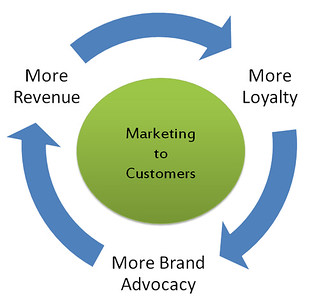
The biggest problem for most business owners is the fact that they have no mechanism for generating positive reviews and/or testimonials.  This is unfortunate since this means that the ONLY reviews posted on most businesses are negative, since as they say, “You can’t please all the people all the time.”

In order to redress this potential disastrous problem, every business owner needs to establish a corporate policy that is dedicated to cultivating positive reviews and testimonials from satisfied customers.  This way when an occasional complaint does surface it will be buried in a mountain of positive press.  In order to accomplish this in a reputable manner, I recommend the following:

1.      Call or talk to some of your most loyal customers and ask them if they would be willing to tell of their experience with your business in front of a video camera.  Video testimonials are some of the most persuasive reviews on the planet.  They can literally turn your best customers into your best salespeople.
2.      At the conclusion of the video, you can also ask them to post a review on Google Local, Yahoo Local, or any other site you prefer. 
3.      If you have a receptionist or sales staff, encourage them to ask your clients to post positive reviews.  (I even recommend having a contest where the employee that generates the most reviews every week receives a reward.)
4.      Broadcast these videos and customer testimonials by reposting them on your newsletters, mailers, blogs and social networks.

The best part about using this strategy is that all it costs you is time.  And that is something in business that can either make or break you, since failing to bolster your online reputation can cost you dearly.  Or, as the Bard might have put it,

“Alas, Poor Yorick! I knew him well.”


When he isn’t waxing poetic, Carl Weiss is president of Working the Web to Win, a digital marketing agency.  You can also join him live every Tuesday when he co-host’s his weekly radio show that airs live every Tuesday at 4 pm Eastern on Blog Talk Radio.

Who Needs Cyberbabble?

By Carl Weiss

When it comes to my day job, which is helping people succeed online, I am many times confronted by prospective clients who are dazed and bewildered by online marketers who make themselves seem important by spouting cyberbabble when asked even the simplest of questions.  I don’t know if they do this simply because they are dyed-in-the-wool computer nerds that speak a language all their own.  Or maybe it’s because they want their prospects to think that all SEO experts are part of some secret cabal. All I can say is that it undermines the job that I and other legitimate online marketing professionals have to do.  More importantly, when I question most of these clients about what it was that they were paying for, they look at me like deer in the headlights.

What is SEO?

While intoning mantras like SERPs and Keyword Density may sound impressive, what it means to 
How to Search Engine Optimization
generating online visibility is absolutely nothing.  (As far as I know, you put SERP on your pancakes.) When it comes to making your website sticky, well that is another matter altogether.  In the first place, Search Engine Optimization has changed so radically in the past few years that it is hardly recognizable as such.

Go back five years and ninety percent of everything you needed to please even the most finicky search engine was on your homepage.  (The other ten percent being backlinks.)  Today, only twenty five percent of what the search engines use for ranking is contained on-site.  The other seventy five percent is contained offsite, including blogs, social networks, videos and podcasts. 

While it is still important to include meta tags (code contained at the top of the page that identifies the site’s content) and alt tags (used to identify images), it is just as important to provide both the search engines and prospects with everything they need to make a buying decision on the homepage.  Gone are the days when people will spend five to ten minutes clicking around your site to decide whether or not to do business with you.  Statistics show that you have less than two minutes to dangle the bait and reel in the fish.  So if your website contains twenty five links, if the prospect has a tough time finding your phone number and/or address, or if they are confused in any way, they are history.

The 5 Magic Bullets

If you want to turn clicks into cash, then what you need are the following 5 items in plain site:

1.      Phone Number – Nobody wants to click onto a subsidiary page to find your contact information.  That is so old school.  Make sure your phone number is highly visible at the top of the page if you want to do business with anyone online.
2.      Address – With all the cybercrime going on people need to know that your business is on the up and up. This means they want to see a physical address.  If you don’t want to be taken for a fly-by-night operation make sure your address and google map are in plain sight.
3.      Intro Video – Since 99% of the people that click onto your site have never done business with you and since you have less than 2-minutes to get their attention, why not commission an introduction video that introduces you and your staff, tells prospects why they should do business with you and asks for the sale?
4.      Testimonial Videos – Want to turn your best customers into your best salespeople?  Create a short video interview that lets them tell the world what kind of experience they had with you. 
5.      Unique Sales Proposition – Many times when prospective clients ask me what they need to do to start selling more products and services online I tell them they need to provide prospects with an offer that will make them want to give your business a try.  (It doesn't always have to be a discount on the price either.  Intangibles such as a white paper or e-book can be a great way to generate the initial sale.)


 What you need to ask online marketers before you trust them with your site.

Like it or not, when you trust your online marketing to an outside agency, you are putting your business’ 
future in their hands.  Should they make one wrong move you could find your website delisted or even blackballed.  If this happens it could take months or even years to climb back onto page one.  Below are ten questions you need to ask any online marketing agency before you sign on the dotted line:

1.      How long have you been doing online marketing?
2.      What services do you provide? (Web design, SEO, blogging, social networking, email marketing, video production)
3.      How many clients do you currently have?
4.      What kind of guarantees do you offer?
5.      Can I view some videos testimonials?
6.      Can I contact some of your current clients?
7.      Has your agency ever won any awards?
8.      How often can I expect to hear from you once I sign up? 
9.      How long do I have to continue using your service?
10.  What do I do if I am dissatisfied with your services.

By having a clear understanding of the responsibilities of both parties, as well as being able to verify whether or not an agency that is vying for your business can get the job done, you will not only be able to sleep better at night, you will have something tangible to show for the effort.  Now please pass the SERP.


Carl Weiss is president of Working the Web to Win, a digital marketing agency based in Jacksonville, Florida.   You can listen to Carl live every Tuesday at 4pm Central on BlogTalkRadio