Lost in Cyberspace

By Carl Weiss

In the recently released motion picture Gravity, astronaut Sandra Bullock becomes detached from the Space Shuttle after a debris storm causes her and fellow astronaut played by George Clooney to wind up adrift in the vastness of outer space.  Tumbling all alone in the dark void with a limited supply of oxygen and little hope of being rescued, Sandra copes as best she can with the terror of being lost in space.  While few of us will ever come to know this kind of visceral fear, many website owners have experienced a similar sense of despair and helplessness when their site went from page one to the vastness of cyberspace after an algorithm reset by a major search engine.

The fact of the matter is that search engine operators do not want anyone save for a select few to understand how their algorithms work.  They are also known to throw a monkey wrench into the machinery from time to time.  Sometimes they do this to shake out the legions of businesses that make money by gaming the system.  Sometimes they do it just because they can.  Either way, while an update by Google may come with a cute and fuzzy moniker such as Panda or Penguin, once published it can leave website owners feeling more like they have been attacked by a Bengal Tiger or Great White Shark. 

Guilt by Association

While there are more than one hundred items that Google uses to rank pages, one of the easiest ways to run afoul of the 800 lb gorilla in the room is to game the system, or hire someone who does so on your behalf.  For more than a decade it was possible to aggregate rank by using underhanded tactics such as keyword stuffing, link farms and invisible text in order to create the appearance of viability.  Of course this was back in the days before the search engine spiders had the ability to analyze what they saw as they leapt from website to website.  Today the googlebots and other search engine spiders can not only understand what they read, but they have been programmed to detect cheaters and respond accordingly.  If your site is determined to be employing any of the Black Hat techniques that are frowned upon, not only will you be relegated to the backwaters of cyberspace, but it could be years before you will ever see the light of day. This last fact is regardless of whether you were the one who added the offending code, or whether it was added by someone in your employ. 

More importantly, when it comes to search engine success, you don’t need to cheat them to beat them.  While gaming the system may generate position in the short run, it almost always fails over the long haul. Plus there is a high probability that when the next algorithm change is published, you may fall into a black hole from which you may never be able to climb out.  Some website owners are literally forced to commission an entirely new website in order to get back into the game, losing both time and money in the process.


While it is impossible to completely understand every warp and weave of Google’s algorithm, just as you don’t have to understand how to build a chicken to make an omelet, you can get the gorilla to like you by feeding him what he likes to eat.  The Google gorilla is a picky eater who first and foremost likes his own brand.  This translates into creating lots of content on all the properties that Google owns.  So if you blog, you need to become familiar with Blogger, which is owned by Google.  If you produce videos, then you need to create a channel on YouTube.  And even though you may be addicted to Facebook, if you want to make the gorilla smile on your online marketing efforts, you had better start feeding Google+ as well.

What do Webmasters Want?

Now you will notice that so far I have failed to even mention on-page optimization (aka SEO).  That’s due to the fact that while important, it now only contributes to 25% of your overall score.  The other 75% is gleaned from legitimate backlinks, along with blogs, social media and videos.  Not that on-site optimization is unimportant.  It has simply changed over the course of the past few years.  Where such things as Meta Tags and keyword richness were all the rage four or five years ago, Google claims that they no longer rely on Meta Tags at all for ranking.  Today Google places more emphasis on SEO-friendly urls and titles, along with backlinks and mixed media.  Don’t confuse having links to social sites and blogs with feeding them.  Unless you are adding at least a blog a week and feeding your social nets on a daily basis, the googlebots will know and act accordingly.

In fact, as I pointed out in a previous blog entitled, “Is SEO Still Relevant?” the term Search Engine Optimization really needs to be altered to Search Engine Marketing, since optimizing the website is only a small part of the process to achieving page one results today.  As a result the task has become infinitely more complicated.  No longer can you create a perfectly optimized website every two to three years, spin it off into cyberspace and expect it to climb the ranks to wind up on page one.  Now you also need to commit time and/or money to feed the system on a daily, weekly and monthly basis in order to get into the game.  While many people see this as a way of tipping the playing field in favor of larger firms that can afford to hire a team of bloggers, social posters and videographers to do their bidding, nobody ever said the game was fair.

All's Fair in Love and SEM 

Face it, Google and all the other search engines don’t make one slim dime from organic search.  They make their money from pay-per-click campaigns and banner ads, most of which comes from major corporations.  Besides, when you own 82% of search as Google currently does, fairness doesn’t even come into consideration.  As the saying goes, “What do you feed an 800 lb gorilla?  Anything it wants.”

For many small businesses, this isn’t the best policy, it’s the only policy.  Giving the gorilla what he wants gives you a chance to take advantage of the system just as your bigger brethren do.  In fact, we have worked with small businesses who not only competed successfully with Fortune 500 contenders, but who eventually bested them.  Another advantage of being smaller is that you can react faster.  You can analyze the competition and target their weaknesses.  If a larger competitor has the advantage in social media but is weak in blogging, bulk up your blog.  If they don’t understand the advantages of video, go after them on YouTube.  The beauty of the web is that the emperor wears no clothes.  You can see what everybody else is doing and react accordingly.

This brings up the second speed bump that stops many small businesses in their tracks: Making the time to
feed the beast.  Most business owners have enough on their plate day in and day out in simply running their businesses.  This leaves precious little time to write and post to blogs and social sites, let alone shoot and edit video.  However, the answer to this dilemma is but one point and click away.  It’s called outsourcing.  For less than most businesses spend on a display ad in the yellow pages, you can hire out some or all of the tasks mentioned above.  There are legions of bloggers, social posters and videographers out there that are ready, willing and able to come into the fray.  If you find that you don’t have the budget to outsource the entire project, determine which part of the equation you can do in-house and then outsource the rest. 

The only other solution is to ignore the Internet, as all too many small business owners are wont to do.  To this I pose the following question, “If you aren’t found on page one of Google, but your competitors are, is this good or bad for your business?”  (Danger, Will Robinson!)  While it may take a little time and money to get off the bench and into the game, even if it took several months to wind up on page one, this is still better than being lost in cyberspace. 


Carl Weiss is president of W Squared Media Group, a digital marketing agency that offers guaranteed organic placement on a number of major search engines.  He also owns Jacksonville Video Production and co-hosts the weekly online radio show Working the Web to Win every Tuesday at 4 pm Eastern.

Start the Presses

By Carl Weiss

Every business owner is always on the hunt for effective yet inexpensive methods to generate a buzz that can get the word out and command the attention of prospects.  While traditional advertising is one way to self-promote, it is not only expensive, but it is also difficult to track.  Pay per click advertising, while eminently trackable, is not all that inexpensive since it is sold for the most part on a cost-per-click basis.  But what if I told you there was one form of promotion that could provide the best of both worlds in one easy to afford package?  And what if this promotional vehicle could not only give you the clout to generate far more exposure than traditional advertising venues, but it could also park you on page one of many newsfeeds and search engines in less than a day.  Would that get your attention? 

A motorized Platen Printing press model which ...What I am referring to are press releases.  Not exactly the new kid on the block, press releases have been around for more than 100 years.  The first documented press release was documented in 1906 when Ivey Lee released a statement concerning a train wreck that killed 50 people in Atlantic City, New Jersey.  His news item was not only picked up by a number of newspapers across the Eastern seaboard, it also set the standard for the vehicle now used by millions of companies and thousands of news outlets around the world.  When you consider that over 80 million people in the US alone get their news online day in and day out, this is a niche that’s begging to be filled.  When you also take into consideration the fact that everyone from journalists to bloggers and broadcasters are always on the hunt for fresh stories and breaking news, then this is one promotional venue that’s hard to beat.

Before you dive headfirst into the water, there are a few things you need to consider.  First and foremost, press releases are not cloaked advertisements.  They are newsworthy stories.  As such, they can announce events, promotions, awards, accomplishments and new products.  Then can also be used to generate a feature story provided that they gain the attention of other writers.  Journalists of all stripes constantly comb though press releases in order to generate material for an assignment. This is also a place where they look for inspiration for an article or broadcast.  So the first rule in writing an effective press release is that you need to grab the attention of a writer or publisher.

You also want to grab the attention of bloggers and search engines, both of which can propel your story to an even bigger audience.  A mention in a popular blog or a page one posting on a major search engine can have a profound effect on both your website’s traffic and your reputation.  It can also result in your receiving a call from other writer’s or broadcasters who wish to interview you for their station or publication.  While fleeting, the exposure from even a single well-placed press release can be game changing.  In fact it can elevate your status to that of “valued expert” which can catapult you and your business to a whole new level.
That’s the good news.  The bad news is that you are competing against millions of other press releases all clamoring for attention.  What this means is that unless your last name is Kennedy or you are on intimate terms with a movie star or some other well-known celebrity you are going to have to work long and hard to come up with a story that has star appeal. 

Take it From the Top

In the press release game, the headline is where the rubber meets the road.  Unless you grab the reader from the get go, the chances of your release getting read and reposted are slim to none.  Whether you write the headline first and the release afterward or the other way around matters not.  What counts is whether your headline not only describes the essence of your release, but also jumps out of the herd.  A dynamite release with a lackluster headline will simply get lost in the shuffle. 

Since you also hope to command the attention of major search engines, you need to include important 
keywords in your headline.  In fact, one of the best ways to kill two birds with one stone is to start with the keywords that are likely to generate search engine results and then frame a demonstrative statement/headline that contains these keywords. Feel free to use search engine keyword tools or consult social networks to see which keywords are trending before you begin crafting either the headline or the press release itself.  Not only is using keywords from the outset going to produce greater search engine visibility, it also makes it easier for journalists and readers to find your release.

Brevity Does a Body Good

Next comes the body of the press release.  Just as with social networking, there are rules when it comes to crafting an acceptable press release. Since journalists are your target, understand that they have neither the time nor the inclination to research or extensively rewrite your company’s big announcement.  Therefore you need to write the release as you would like to see it appear in a news story.  Start with the date and city from which the release originates.  The first sentence needs to be concise.  If the headline of the press release reads, “New Caveman Diet Rocks,” then the lead might be something like, “Forget the carbs, the Caveman Diet promises to shed pounds by revisiting caveman cuisine.” 

Then it’s time to move onto the first paragraph which needs to hook the reader into reading more.  Ideally it should fill in some blanks while expanding the lead and providing additional detail.  What you don’t want to do is turn the opening paragraph into either a tweet or War and Peace.  Ideally your release should be a maximum of a page in length.  It needs to communicate who, what, when where, why and how, while sticking to the facts and keeping your copy short, sweet and to the point.  Remember that whoever reads your release will in all likelihood have read dozens of others just like it.  If you want your story to get ahead of the pack you need your release to be more than well written.  You need it to be press-ready.

Who Are You?

Lastly, consistent press releases can establish you as an industry expert. This is important because establishing your expertise helps you gain the trust of your target audience. It can also be a positive boon for media relations. Whenever the media needs someone to comment on an issue related to your industry, wouldn’t it be wonderful if your name was front of mind. Expert status can be an asset that you can take to the bank.  Well written and properly distributed press releases will allow you to stand out among the crowd, gain the attention of the media and above all start the presses rolling.

Carl Weiss is president of W Squared Media Group, a digital marketing agency in Jacksonville, Florida.  He is also co-host of the online radio show Working the Web to Win which is broadcast live every Tuesday at 4 pm Eastern.


Enhanced by Zemanta

Making Text Message Magic

By Hector Cisneros 

Most people don’t want you to text and drive, but businesspeople can drive web traffic with text messages! Text messaging also lets you sell products, announce events, deliver promotions and special offers to thousands of people. However, there are a number of speed bumps that you have to nagotiate in order to be successful. Join us this week as we dive into the depths of Text Messaging Magic for your business.

Texting on a qwerty keypad phone
The first question you will want to answer is; "What is Text Message Marketing?" Text message marketing is advertising via SMS technology also known as short message service marketing. In essence you can send a short message (160 characters or less) to a person's cell phone or to a short message account that they have on a computing device. These messages are very popular and are used by people of all ages.


Why should every business  consider advertising with an SMS marketing service?
#1 It works! your ROI is very high. Your cost for engaging in SMS messages can run as low as 20 to 50 a month and still get real responses.
#2 It has a very high open rate. Most messages are read 95% of the time. On top of that your response time is almost instantaneous.
#3 A focused message gets read and usually works better. Focus gives the viewer clarity and asks them to make a decision.
#4 You can target an audience that wants to receive your message. Opt-in lists are the keys to success. Sending a message blindly to someone will only make them angry. However send someone a message for a coupon code for something they want and the phone will ring off the hook.
#5 There are more mobile phones in the world than there are computers. People are addicted to texting. For most young adults, it’s a way of life.

Here's What You Need to Insure Success.

#1 Avoid slang, abbreviations and most of all hype. People are tired of being lied to. Your message 
English: SMS messages sent monthly (June) in U...
English: SMS messages sent monthly (June) in USA in million, source: http://www.cellsigns.com/industry.shtml (Photo credit: Wikipedia)
needs to be a focused legitimate offer that easy to understand and act on. Don't try to be slick just  Simply provide a bona fide offer worth taking advantage of.
#2 There should not be a long time delay before the recipient can take advantage of the offer. The offer needs to be in the here and now, not next week. It should provide real time saving that recipients can take advantage of today.
 #3 Make sure your message is recognizable. It should clearly identify your company, brand or product. If they have to guess who you are you’re already lost.
 #4 Customers want to feel special. Your offer has to be a real value that the average Joe or Jane can’t have unless they are subscribed to your SMS marketing service. Let them know that only they have access to this special offer.
 #5 Make sure your message is positive and shows unmistakable value. If  they can't recognize the value of your offer, it's not a value to them!
 #6 Make your messages interactive. Sometime by following up your offer with another message you can get a second or even a third sale, by just asking.
 #7 Don't send your messages too often. Ask your subscribers when it's best to receive their messages. Find out which time zone they are in. If you don't know their needs, avoid early morning hours before 11 AM and don't send messages late at night unless you’re a casino in Las Vegas
 #8 Master the right marketing moments. Learn to send messages when your clients want them. Restaurants clients want messages before Lunch and Dinner.  Travelers like message on Thursday and Friday. Retail consumers like message before major holidays. Scan your website data for peek visitation times. Always ask clients what's best for them and they will tell you.
 # 9 Provide value first before you ask them for any information. Win their trust by providing value and they will be more willing to cough up an email address, time zone or address.
 #10 Always get a client’s permission. Always buy opt-in lists if you’re not building your own. Nobody 
SMS: Text Messaging Gets Redesigned
SMS: Text Messaging Gets Redesigned (Photo credit: pouwerkerk)
wants to see your message if they haven't chosen to subscribe to your service. If you add new campaigns, products or services, be ready to ask for permission again. Getting their permission is a fundamental key!
  #11 Don't just send coupon codes, send valuable content. Provide product announcements, free access to special websites and social pages. Send VIP status acknowledgements can also be a great way to build trust and loyalty.
 #12 Get your own vanity short code SMS phone number. Having your own number shows a commitment to this kind of marketing program. It’s much easier for a person to remember a short number than what that number spells. It also makes it easier for them to respond.

There you have a  comprehensive overview of what you need to know about SMS marketing.  If you have found this article useful please pass it on to your friends and co-workers. 

Hector Cisneros is CIO of W Squared Media Group, a Jacksonville Florida based digital marketing agency. Hector is also co-host of the weekly radio show Working the Web to Win which airs every Tuesday at 4 pm Eastern on Blog Talk Radio.


Enhanced by Zemanta

Blogging for Big Bucks

by Hector Cisneros & Carl Weiss

We've all heard of the Gold Rush where people uprooted their lives and moved clear across the country to pan for gold.  Well I’m here to tell you that the Gold Rush isn't over.  It's just moved to Cyberspace. Today
there are people turning blogs into gold by creating huge followings online.  Even if you don't create hundreds of thousands of rabid fans for your blog, publishing a weekly blog is a great way to augment the bottom line. A blog can provide a platform to showcase your business, your expertise and your products. Add to this the fact that blogging can raise your credibility, increase your search ranking and allow you to spread your message on multiple social nets and you have a winning marketing tool. However, in order to turn prose into gold you have to learn a few new tricks.  You need to work the social nets to build your audience.  You have to learn how to use pull marketing to get them to buy.  In this article on Working the Web to Win we will discuss the ways you can use blogging to bolster your business' bottom line as well as making money directly through your blog 

Why do people love blogs?

I don't know if you have noticed it, but most people like their information in bite-sized chunks.  Most people have neither the time nor the inclination to wade through a ten page report.  They want their cookie and they want it NOW!  A well written blog feeds this need by providing useful, timely and relevant content in a compact space. Better still, it also allows bloggers to embed images, podcasts and/or videos which are designed to dovetail with the blog and provide even more readily absorbed information.  Adding mixed media to your blog is like offering dinner and a show to your crowd.  They not only get to chow down on the meat and potatoes provided by your prose, but they also get dessert in the form of video or audiocasts.  What's not to like.


You can get there from here

Of course, the rub is that you or someone in your employ needs to take the time and trouble to create the blog each and every week.  Most business owners say they would love to blog but have neither the time nor the expertise to do so on a regular basis. So, how do they bridge the gap? A business owner either needs to immerse him or herself in the learning process or they need to hire a copy editor or ghostwriter to help them produce the finished product. Sometimes copy editors not only polish your prose, but they can help you learn how to add blogging to your skillset.

Plenty of Free Help Online

There are many online help facilities that can assist novices in learning the art of blog writing. I highly recommend eZine Articles Online. They have tutorials and offer great examples anyone can follow to help them get started. Next a novice needs to practice by writing their own blogs. Understand that in the beginning your output may be less than Pulitzer material.  Everyone has to start somewhere.  That’s why in the early stages a copy editor is well worth the expense.  A professional writer will also keep you looking good because they will keep your submissions up to a higher standard than most novices are capable.


If you don’t want to spring for an editor, you need to at least opt for high quality grammar and spelling check programs. Always use the latest version of Microsoft Word, since it will help provide the most accurate first draft without any added expense. Two of my favorite grammar checkers are Grammarly and Ginger. These two online applications are powerful and full featured. No application is perfect so don't forget to always get another competent human to lay their eyes on your document before it gets published. (We refer to this individual in the trade as a Blog Buddy.)


Search Engines Love Blogs

Of course, even the most riveting story will lie there and die if no one reads it. (We refer to this phenomenon as a Billboard in the Desert.) One of the little known secrets of blogging and article writing is that a well crafted and distributed blog posts receive a relatively high ranking. The most important aspect of getting ranking is being read, commented on and shared.  Google and other search engines notice this readership and will often give it a relatively high score. Especially if the blog has a high keyword match, is timely, relevant, and has been viewed and commented on by a significant number of readers, it is not unusual for the blog to appear on page 1 of Google.  Apparently Google is gaga for blogs.

How do you build an audience?

This is where posting your articles to the social nets comes into play. More importantly, getting your friends, customers and coworkers to comment on them and then repost them to their social nets is the magic formula you need to master. About a year ago we created a subscription peer group where like-minded business owners help each other by committing to reading, commenting on and sharing each other's articles and blog post.

Don’t expect overnight success.  When you first begin this process you won't have very many readers. This is why it's important to grow your social networks. We recommend that you concentrate on the top 5 social networks. Facebook, YouTube, Google+, Twitter and LinkedIn. All of these networks have a minimum of 200 million subscribers and give you a large pool from which to attract followers. 

It can take upwards of a year or more to create an audience that numbers in the thousands.  But it is well worth the effort.  Better still is the fact that unlike the original 49ers, you won't have to pull up stakes and travel clear across the country in order to get in on this gold rush.

Hector Cisneros and Carl Weiss operate W Squared Media Group, a digital advertising agency based in Jacksonville, Florida.  He is also co-host of the weekly radio show Working the Web to Win which airs every Tuesday at 4 pm Eastern.

Online Reputation Management - Weapons of Myth Destruction?

By Carl Weiss

You worked long and hard to build your reputation and your business.  Years of planning and tens of thousands of dollars have gone into building your brand.  You have achieved a level of trust among your customers that is beyond reproach.  Or so you think.  But all of that can be undone with the click of a mouse by a disgruntled customer or by a wily competitor.  Welcome to the age of digital reputation management.

In today’s wired world everyone has become information junkies.  Whether you like it or not, all kinds of 
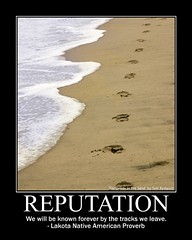
Reputation
information about you and your business is floating around in cyberspace waiting to be found by anyone perusing a search engine, a social net or any kind of portal that deals in reviews of businesses.  This means that anything derogatory about you, your business, an employee, or a product on your shelves is fair game.  Was a customer served a plate of linguini in your establishment that we beyond al dente?  That can be broadcast on any number of review sites in realtime.  Have you or one of your employees been charged with DUI?  That can make the rounds of the social nets with alarming speed.  Unlike in the past, where a local company run by shady operators or offering shoddy customer service could ply their trade with impunity, today the emperor wears no clothes.  This means that you can run, but you can’t hide in the information age.  This is a good thing for consumers and reputable businesses, since who wants to get tarred with someone else’s brush.

However, there is also a dark side to reputation management that all too many reputable businesses find out about the hard way.  Like it or not, it is all too easy for your reputation to be damaged or even destroyed by erroneous or malicious information.  Does your business have a name similar to a competitor with a less than sterling reputation?  Then it is not impossible for a disgruntled customer to file a complaint on a review portal or social network that targets your business by mistake.  Does someone else in your town have the same name as you?  If they get into trouble with the law there is a high probability that your good name can be dragged through mud along with theirs.  Have you recently fired someone in your employ?  If they feel in the least way slighted by the termination, this can open an ugly can of worms that can take on a life of its own in cyberspace.

60 Minutes
60 Minutes (Photo credit: Wikipedia)
Think this can’t happen to you?  In a broadcast on 60-Minutes this past Sunday, a businesswoman had her credit destroyed by a mistake on her credit report that was clearly a case of mistaken identity.  Not only did the report list a different name than that of the responsible party, but the attorneys for the guilty party even provided a letter stating that the businesswoman was not responsible for the outstanding debts of the other party.  Yet even after all this the credit reporting agencies refused to remove the erroneous information and restore her good name until they were sued in federal court.  The 60-Minutes piece went onto inform the public that this was not the exception but the rule in the credit reporting industry where you are presumed guilty even if you have proof of your innocence. 

The online reputation industry operates under a similar set of rules.  Once a complaint has been filed, it is nearly impossible to redress, let alone remove.  This makes it exceedingly impossible for legitimate businesses to operate, since as the saying goes, “You can’t please all the people all the time.”  Trying to get a bad review removed from a social net or review site can be all but impossible.   With many review sites and social nets there is no way for you to pick up the phone and call customer service because there is no customer service number.  Ever tried to call someone at Facebook?  There is no such number.  While you can place a call to Google, being able to get them to remedy or erase an error can take weeks or even months.  (It took nearly three months for our company to get Google to change the address of a client of ours who had moved his business from one county in Florida to another.)

Worse yet is the fact that an underhanded competitor can use this very loophole to attack your business.  Ever see an online complaint against a business that had been posted anonymously?  There is a high probability that it was posted by a competitor.  When it comes to mudslinging, politicians are not the only people who know how to play the game.  With the current lack of checks and balances on most social networks and review portals, it is all too easy for the competition to turn a system that was meant to protect the consumer into one that can be used to attack any business with impunity.

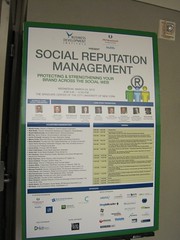
#bdi Social Reputation Management Conference N...
The other salient fact is that with hundreds of places to dish dirt online, it is a Herculean task to police your 
reputation.  This has spawned an entire industry called reputation management that is tasked with monitoring and identifying posts about client businesses.  This also means yet another expense for participating businesses since these services charge anywhere from $99 per month to $999 per month depending upon the level of service selected.  Even paying top dollar doesn’t guarantee that these firms can steam clean your online reputation, since they are forced to play by the same rules as everyone else. 

All that you or I or any high-priced consultant can do to mitigate damage is try to contact the offending party to try to convince them to remove the negative post, or to post a large number of positive reviews to push the bad review off the first page.  The problem with reviews are that one bad review is more powerful than ten good ones.  The other problem is that most businesses do not have a protocol in place that encourages satisfied customers to post positive reviews.  Therefore even one complaint sticks out like a sore thumb.  None of these tactics will redress a choreographed smear campaign by a disgruntled former employee or underhanded competitor.  I have even seen entire websites commissioned by competitors that were designed to besmirch the reputation of a targeted business.  Try getting that turned off with anything short of a lawsuit and a court order.


The bottom line is that if you hope to protect your bottom line you as a business owner need to take reputation management seriously and do whatever it takes to defend your turf and protect your good name before one of these weapons of myth destruction sneaks up on you and does irreparable harm.

Carl Weiss is president of W Squared Media Group a digital marketing agency based in Jacksonville, Florida.  You can share your views with Carl every Tuesday at 4 pm Eastern on his Working the Web to Win radio show.
Enhanced by Zemanta

The Borg in Your Boardroom

By Hector Cisneros and Carl Weiss

Have you noticed all the new cybernetic devices coming out lately? Prosthetic legs that allow you to run 
star trek borg docking station
star trek borg docking station (Photo credit: Wikipedia)
faster than normal, artificial eyes that see and bionic ears that hear?  Add to this such things as augmented reality, and the ability to use avatars for remote sensing and to do work and the question is not one of, “Do we have a brave new world just over the horizon?”  It’s more a question of is it here already? If you’re wondering if there is a biological upgrade in your near future, read on and find out what’s likely to happen once there is a Borg in every Boardroom.

Being a big Star Trek Fan, I am always amazed at all the wonderful inventions we see coming to life that were first envisioned in the Star Trek TV series. Recently my partner and I wrote about how cell phones can trace their history to the communicator from the original series and how 3D printing is the precursor to the Replicator that also debuted on that series. But of those episodes, none were as frightening or as exciting as the Borg episodes. These are the episodes that made the phrase “Resistance is futile” an everyday saying!

So what does all this have to do with internet marketing and online commerce? Plenty! The year is Star Date 2013 and we already have hundreds of cybernetic augmentation devices currently being peddled in retail stores as well as online. 

One of the world’s largest corporations (Google) is spearheading a new means of cybernetic communications called Glass. Private citizens (even teen agers) are building their own cybernetic limb replacements with 3D printers. Cochlear implants are common place. Cybernetic eyes are already in experimental use. We have had pace makers to control heart function for decades. Artificial Heart’s have been in use to bridge the gap between transplant surgeries and have been around for a number of years. We regularly replace joints (knees, hips, shoulder etc…, tendons, bones, teeth, skin, hair and so on with their manmade counterparts. We have devised implants to stimulate parts of the brain in order to control epilepsy, hunger, and even the sex drive. The military is already using many types of remote sensing, defense and augmented battle devices to help soldiers survive the fog of war.

Some of the most amazing newcomers to cyber augmentation are: Computer controlled prosthetic limbs which help people to walk with cybernetic legs or pick up objects with cybernetic arms and hands all controlled by the wearers own muscle movements and thoughts. Soldiers in the field routinely use robots and aerial drones to scout, defuse bombs and enter dwellings.  Scientists are even working on creating a cloaking device to make the wearer invisible.

Right now most of the cybernetic ear implants are designed to help people regain lost hearing. But hearing enhancement devices have been used by hunters and solders for many years. The next step will be implanting augmented hearing permanently in your head.

Cybernetic eyes are on their way. We have been using many forms of vision enhancements for years. We have all kinds of telescope, microscopes, binoculars, light filtering devices, night vision goggles and cameras
Google Glass
. Now Google has married a computer to many of these of devices and create Google Glass a wearable computer that interacts with the wearer using voice commands much just like the computer on the original Star Trek series. We already use computers as extensions of our mind and bodies via the internet. It won’t be long before people start implanting cybernetic enhancements in order to expand their perception of the real world much like the character in the Next Generation named Jordie did.  In fact there is already a term for the implantation of transhuman technology into the body.  It’s called bio-hacking.

In fact there are a number of people who have already begun experimenting with bio-hacking:
Rich Lee was a mild-mannered salesman from St. George, Utah until one day he was bio-hacked to have headphones installed into his head, thus increasing his ailing vision with the sonar power of a bat while enjoying his own soundtrack through the power of magnets. Lee is a self-described “grinder”, a group that believes in the enhancement of the human body through technological modification – or ‘biohacking’. The Utah resident’s surgical procedure was carried out by “the godfather of body modification,” Steve Haworth, who has been experimenting with biohacking since 1998.

There is even a newly released Hollywood motion picture called Elysium that stars Matt Damon in which he has a robotic exoskeleton grafted onto his body to help him regain function lost after an industrial accident.  I won’t spoil the flick for you, with the exception of telling you that while the movie is set in the year 2154, the exoskeleton technology described is already being developed to assist paralyzed people to walk. 

Also known by the term Transhumanism, Wikipedia describes the genre as an international cultural and intellectual movement with an eventual goal of fundamentally transforming the human condition by developing and making widely available technologies to greatly enhance human intellectual, physical, and psychological capacities.  The term itself was coined in the 1960’s by author and futurist Fereidoun M.Esfandiary, who among other things correctly predicted such things as invitro fertilization, teleconferencing and genetic manipulation. He also legally changed his name to FM-2030. 


While much of the technology involved seems just as out there as changing one’s name to FM-2030, bear in mind that everything from the Star Trek communicator (a flip phone) to a Tricorder (smartphone) to a
Replicator (3D printer) to a Shuttlecraft (Space Shuttle) has come to pass.  Besides in this highly competitive world anyone who wants to succeed has been and is going to utilize most every technology to gain an advantage.  So when you walk into that board meeting in the not too distant future only to encounter a biologically enhanced human sitting across from you, remember this one piece of advice, “Resistance is futile!” 

Hector and Carl are the enhanced humans who manage W Squared Media Group in Jacksonville, Florida.  Join them every Tuesday at 4pm Eastern as they host Working the Web to Win on Blog Talk Radio.
Enhanced by Zemanta

Thinkin LinkedIn 2

by Hector Cisneros

It has been some time since we discussed how to leverage the online marketing potential of LinkedIn.
Image representing LinkedIn as depicted in Cru...
This powerful business-to-business social network has a number of new features that are designed to connect you to other business owners if you know how to access them. In this article I will discuss the four must do daily tasks that every LinkedIn pro takes advantage of.  I will also cover three new features that can make LinkedIn life easier and keep your momentum going and lastly I will provide links to other articles that give even more comprehensive information to help you master LinkedIn.

In my last article about LinkedIn, entitled "How to Leverage LinkedIn for Business & Career Enhancement", I gave a broad overview of the top features available on LinkedIn. LinkedIn like all social networks follows unwritten rules of social etiquette and protocol. In this article I want to start off by discussing the absolute minimum of tasks you need to do on a daily basis. These four tasks are the 80/20 rule you have heard about, where 80% of your productivity comes from 20% of the functions you use.

Let's begin by keeping your profile up to date. 

The first thing a person sees when they look you up on LinkedIn is your profile. This is the first place you need to put your best foot forward. Never accept mediocrity by leaving your profile incomplete. More importantly make sure you let your audience keep up with the changes that are happening in your business. You can always add new successes, projects that you've started, product launches, add company pictures etc… The benefits of keeping your profile up to date are: 1. You put your best foot forward.  2. You get free promo's from LinkedIn. That's right, LinkedIn sends out a daily list of people who have updated their profiles. This helps keep you in front of your peers and potential clients and it's promoted by LinkedIn, so it isn't considered as spam!

Next lets discuss posting articles relevant to your industry and position. 

Try doing this daily if at all possible. If you have lots of followers you can up this to say 3 times a day. If you're scientific about it you will measure what day of the week and hours of the day get the most reads. You can do this by tracking your posts with Hootsuite or some other software program. I can't overemphasize the importance of providing useful content to your peers and prospects. Posting lots of information about yourself or your products/service will hamper your progress. If you want to provide information that builds your credibility, write quality articles and blog posts about your industry and mix them with posts from industry leaders. Make sure the content is useful and written grammatically and technically correct. If you lack this skill find someone who can ghostwrite for you. Your cost can be as low as $50 for a short blog post to $300 for an article length document. The best way to look like an expert in your field is to show off your expertise in writing. Blogging or self -publishing is a great start. Getting published in industry related magazines provide its own advantages and raises your credibility to a new level. A third way of building your credibility is actively participating in Groups. Again be ready to help others out. Don't act like a rookie salesperson ready to pounce? Act like a host, ready to help. Here is where providing useful content can also pay off. People will follow you if you are in their group and you are posting quality information that they find useful.

Third, endorse others and post testimonials to people who have helped you. 

Providing other businesses with testimonials allows you to leverage the law of reciprocity. This law is alive and well and still works in the 21st century. The likelihood of someone reciprocating and endorsing you back is very high. LinkedIn offers three ways to endorse others. First, you can create a testimonial and post it in their recommendation section.  Second you can endorse them for a specific skill set by clicking on that specific skill or expertise in that section. And lastly you can post something positive about a person or company in the "Share an Update…" field on your home page or activity field in LinkedIn.  Endorsing others is a great way to beginning a relationship with a referral partner, customer or prospect. I would add that genuinely endorsing others fulfills a need that can't easily be fulfilled in any other way. On top of that LinkedIn automatically asks for reciprocation when it announces to the recipient that they have been endorsed by you.

Of the three methods a written testimonial is the best and most powerful way to endorse others. The second most powerful is a posted endorsement in the timeline of the newsfeed. A message of congratulations or positive statement of endorsement goes a long way here. Clicking on a skill or expertise is the least powerful but does have some advantages that make it different from the other kinds of written endorsements. For one it's quick and easy. A click or two and you're done. It also prompts LinkedIn to contact the person being endorsed with the statement "You have been endorsed"! You’ll get noticed in a flattering way to say the least.

Fourth, engage members in gracious and useful correspondence. 

The reason I say gracious and useful correspondence is that most of the correspondence people receive in LinkedIn are solicitations of some sort.  These solicitations cover the gamut from tacitly asking to connect to our right cold sales calls. A way to be gracious is to say thank you whenever possible to anyone who connects with you, likes your post or mentions you in anyway. A way to be useful a correspondent is to provide useful information like needed links, free white papers on your industry and be willing to help other with questions they post asking for assistance.  If you do this in a way that beneficial it will get noticed. Not everyone is going to jump up and say thank you back but a good portion of the recipients of your help will remember you. The law of reciprocity will kick in and what goes around will definitely come around, and you will eventually be the recipient of someone asking for your help as a customer.

New features worth Noting:

LinkedIn now has sponsored ads in their newsfeeds and they have also added video ads in the Pay Per Click model. Anyone can sponsor ads in the newsfeed time line just like you can for the 
LinkedinAnswers
header ads. It's easy to setup and can be initiated from your own sponsored updates (your posts) or via Ad manager. Once you have chosen a post you want to sponsor you then select the demographics you're looking for. You can choose from location, companies, job title, schools, skills, groups, gender and age. You can also add filters for title, name and category (industry, function, seniority etc…). This is very powerful targeting. Next, choose whether you want to pay on a cost per click or cost per impression basis. Set your budget and the length of the campaign and start. It's that simple. The system will suggest minimal bid prices and daily budgets. I have been able to gets clicks for as little as 90 cents. However most will come in close to the suggested bid rate.!

LinkedIn introduces new company page analytics.  In July LinkedIn introduced their new Company page Analytics which allow the subscriber to better understand what is driving the traffic on your pages. This new service allows you to identify which updates are driving the most engagement. It will allow you to filter engagement trends by type and time period.  It will provide more detailed demographic data on your followers and it will allow you to visualize your follower growth and benchmark your growth against similar brands. This enhancement is also easy to understand because it also utilizes the new built-in help feature which can be accessed by highlighting the question mark symbol. Check out their help video for their analytics.

LinkedIn goes mobile.  LinkedIn’s new mobile app allows for greater customization plus it comes preloaded with the handiest features already setup in the customizable navigation page. This new app also helps emphasize localization. Since 64% of LinkedIn's growth is overseas they have also added additional native language support for 15 languages in total. Click here for LinkedIn own story.

In this article I have shown you four things you need to do on a regular basis in order to be successful with LinkedIn. I have also introduced you to three of LinkedIn’s latest features. You can never go wrong by following these suggestions. Yes there are other things you can add but leaving out these four activities will hurt your chances of success. The new features are worth your investigation, especially if you like using pay per click ads.  If you feel this article was helpful, pass it on to your friends. If you have a something to add to this discussion enter it in the comment section. It been my pleasure share my thoughts on what important and new in LinkedIn. I look forward to reading yours.

Hector Cisneros is a partner, COO and social media director for WSquared Media Group based in Jacksonville, Florida. You can connect with him on Twitter, Facebook, Google+,  LinkedIn, and YouTube. He is also the co-host of Blog Talk radio’s “Working the Web to Win,” where he and Carl Weiss make Working the Web to Win simple for every business. Hector is a syndicated writer for EzineOnline and is an active Blogger, (including ghost writing). He is a published author of two books,  60 Seconds to success (on sale at Amazon and B&N) and Internet Marketing for the 21st Century which you can get free by clicking on the link at WSquaredMediaGroup.com.


Enhanced by Zemanta